10k Gold vs 14k Gold: Which Should You Choose?
A practical head-to-head comparison of 10k Gold and 14k Gold, covering quick verdict, key differences, category winners, buyer fit, and FAQ.
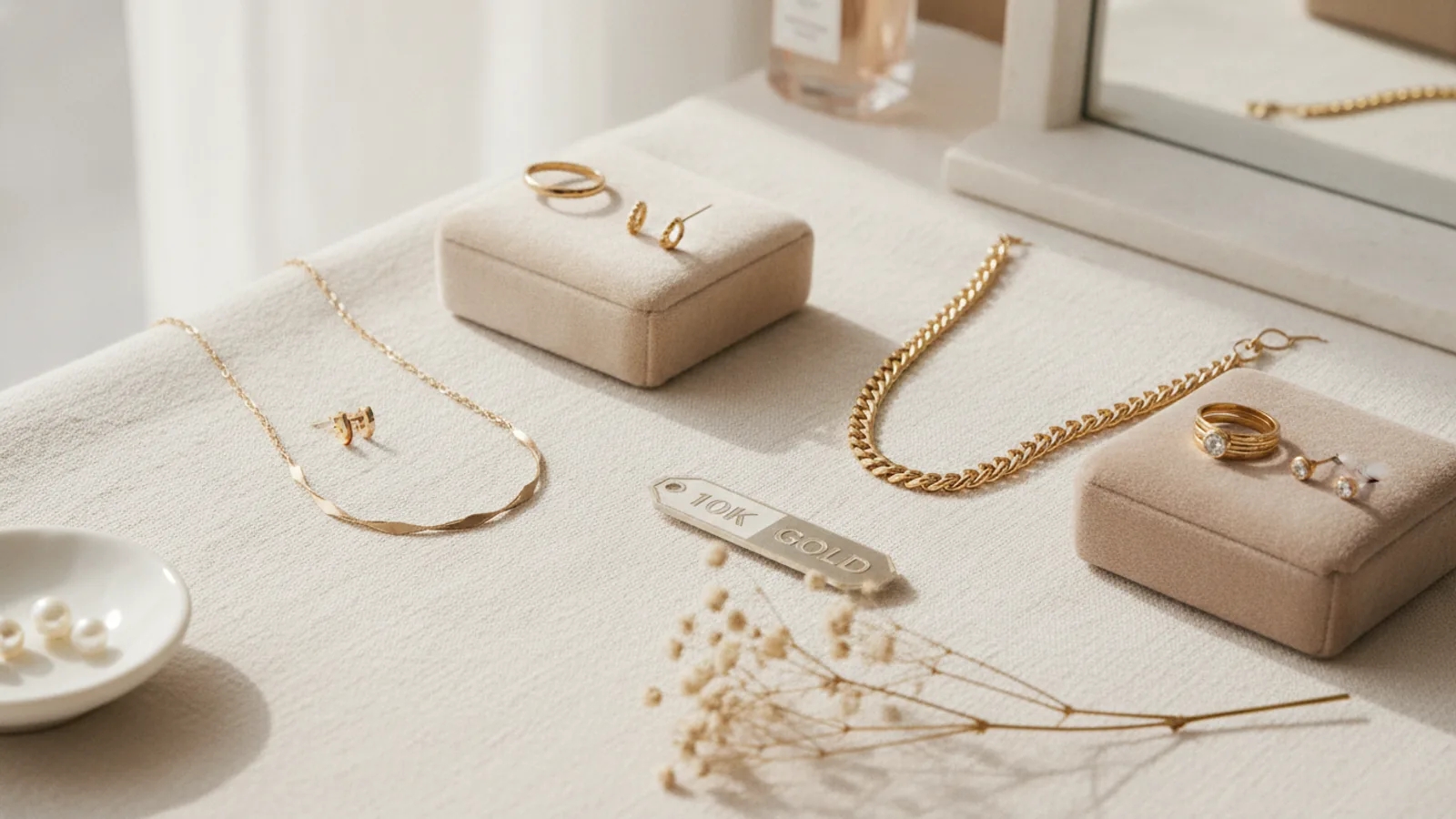
10k Gold vs 14k Gold: Which Should You Choose?
Head-to-head comparison
Overall winner: 14k Gold for its superior balance of rich colour, gold purity, and practical durability.
For most fine jewellery buyers, 14k gold hits the sweet spot, offering the beautiful, saturated colour we associate with gold while being strong enough for frequent wear. However, 10k gold is an incredibly smart choice for those who prioritise maximum durability and affordability, making it a stellar option for everyday pieces or tighter budgets.
This comparison is the result of extensive research into the material properties, market standards, and real-world owner experiences with both 10k and 14k gold. We've analysed the key trade-offs to help you invest wisely in a piece you'll love for years to come.
When choosing gold jewellery, the "karat" (k) number signifies its purity. Pure gold (24k) is too soft for jewellery, so it's mixed with other metals—or alloys—to create a stronger final product. This brings us to the core decision between 10k and 14k gold: a delicate balance between the purity of the gold and the durability of the piece. While 14k gold is often seen as the industry benchmark, 10k gold's remarkable toughness and accessible price point make it the better choice for many lifestyles and occasions.
Option A
10k Gold
- Best for: Maximum durability & affordability
- Strength: Highly resistant to scratches & dents
- Tradeoff: Paler yellow colour & lower gold value
Option B
14k Gold
- Best for: The ideal fine jewellery balance
- Strength: Rich colour & higher gold content
- Tradeoff: More expensive & slightly softer than 10k
Head-to-Head Scorecard
10k Gold vs 14k Gold: Key Differences
The fundamental difference between 10k and 14k gold lies in their composition. The "k" stands for karat, a measurement of gold purity out of 24 parts. Pure gold is 24k.
- 10k Gold: Consists of 10 parts pure gold and 14 parts other metals (alloys) like silver, copper, nickel, and zinc. This means it is 41.7% pure gold.
- 14k Gold: Consists of 14 parts pure gold and 10 parts other metals. This means it is 58.3% pure gold.
This simple difference in the gold-to-alloy ratio dictates everything else: the jewellery's colour, durability, price, and even how it feels against your skin. A 10k gold piece contains more alloy than gold, making it exceptionally hard but less valuable and paler in colour. A 14k gold piece has a majority of pure gold, giving it that desirable rich lustre, but making it slightly softer and more expensive. Understanding this trade-off is the key to choosing the right gold for you.
Measurement Winners for 10k gold vs 14k gold
Routine fit
Durability for Everyday Life
When it comes to surviving the rigours of daily life—typing at a desk, carrying bags, or even working out—durability is paramount. Because 10k gold contains a higher proportion of strengthening alloys (58.3%) compared to 14k gold (41.7%), it is significantly harder and more resistant to scratches, dents, and bending. This makes it an outstanding choice for pieces that are worn constantly, especially rings and bracelets which are more prone to knocks and scrapes. While 14k gold is certainly durable enough for everyday wear, 10k gold offers a superior level of toughness for those with very active lifestyles or jobs that are hard on their hands.
Formula or feature
Purity and Richness of Colour
The quintessential appeal of gold jewellery is its unique, warm, and radiant colour. This is where gold purity plays the leading role. With 58.3% pure gold, 14k gold has a visibly richer, deeper, and more saturated yellow tone than 10k gold. The 41.7% gold content in 10k pieces results in a paler, more subtle yellow that can sometimes appear slightly less vibrant in direct comparison. For an item where that classic, unmistakable gold lustre is the primary desire—such as an engagement ring, a special necklace, or heirloom-quality earrings—14k gold delivers a more luxurious and traditional appearance.
Ease of use
Hypoallergenic Properties & Skin Sensitivity
For those with sensitive skin, the alloys mixed with gold can sometimes be a source of irritation. The most common culprit is nickel, though some people can also react to copper. Because 10k gold has a much larger proportion of these other metals, the risk of a reaction is higher. 14k gold, with its lower alloy content, is generally considered a more hypoallergenic and safer choice for people with known metal sensitivities. If you've ever experienced redness, itching, or discolouration from wearing costume jewellery, opting for 14k gold (or higher) is a wise precaution to ensure your piece is comfortable to wear all day long.
Value
Affordability and Upfront Cost
Price is a significant factor in any jewellery purchase, and this is where 10k gold presents a compelling advantage. Since the cost of a gold piece is largely determined by its pure gold content, 10k gold is always more affordable than 14k gold of the same weight and design. This price difference can be substantial, allowing you to either purchase a larger, more intricate piece for the same budget or simply save money. This makes 10k gold an excellent entry point into the world of fine jewellery and a practical option for gifting or for trend-led pieces you may not wear forever. While 14k holds its value better over the long term, 10k gold offers unbeatable upfront value.
Buyer confidence
Industry Standard & Prestige
In the UK and across North America, 14k gold is the undisputed industry standard for fine jewellery. It represents a cultural benchmark for quality, balancing beauty and strength perfectly. When you buy a 14k piece, you are buying into this recognised standard, which boosts buyer confidence and often translates to better resale value. While 10k gold is still considered fine jewellery (it is the minimum standard in the US), it doesn't carry the same level of prestige. For landmark purchases like wedding bands, engagement rings, or milestone anniversary gifts, the 14k stamp often provides an extra layer of assurance and perceived value.
Choose 10k Gold If...
- You have a very active lifestyle or are tough on your jewellery. Its superior hardness makes it the most durable choice for daily wear.
- You are shopping on a defined budget. 10k offers the beauty of real gold at a much more accessible price point.
- You're buying for a child or a teen. The combination of durability and lower cost makes it a practical and worry-free option.
- You prefer a subtler, paler shade of yellow gold. Its lighter hue can be a beautiful aesthetic choice that complements certain skin tones.
Choose 14k Gold If...
- You want the classic, rich colour of fine gold jewellery. Its higher gold content provides the warm lustre that is so highly sought after.
- You have sensitive skin. It is more hypoallergenic and less likely to cause irritation than 10k gold.
- The piece is for a significant occasion, such as an engagement, wedding, or major anniversary, where the industry standard is preferred.
- You are looking for a long-term investment. 14k gold has a higher intrinsic value and tends to have better resale potential.
Choose 10k Gold If
- You want the stronger default fit after checking the current evidence.
- You care about broader usefulness across the main comparison criteria.
- You prefer the option with clearer decision support for most readers.
Choose 14k Gold If
- Your situation matches 14k Gold's narrower strength more closely.
- You prefer a simpler starting point with fewer tradeoffs to manage.
- You have verified the current details and they fit your specific priority.
Final Verdict: 10k Gold vs 14k Gold
After a thorough comparison, 14k gold emerges as the overall winner for most people seeking to buy fine jewellery. It strikes the perfect compromise between the luxurious beauty of pure gold and the practical strength needed for lasting wear. Its rich colour, higher intrinsic value, and hypoallergenic properties make it the deserving industry standard for everything from delicate necklaces to engagement rings.
However, this does not diminish the exceptional utility of 10k gold. It stands as the champion of durability and affordability. For anyone with an active lifestyle, a job that's hard on the hands, or a tighter budget, 10k gold is not just a compromise—it is the smarter, more practical choice. It allows you to enjoy the timeless appeal of real gold without the constant worry of damage or the higher financial outlay.
Ultimately, your choice should be guided by your personal priorities. For timeless elegance and the quintessential gold experience, choose 14k. For unmatched resilience and outstanding value, 10k is an excellent and highly recommended option.
10k Gold vs 14k Gold: Which Should You Choose? FAQ
Is 10k gold considered "real" gold?
Absolutely. Any gold that is 10 karats or higher is considered real, fine jewellery. 10k gold is 41.7% pure gold mixed with other alloys. While it has less pure gold than 14k, it is far from being fake or costume jewellery.
Will 10k gold tarnish or turn my skin green?
10k gold is less resistant to tarnishing than 14k gold due to its higher alloy content, particularly copper. While it doesn't tarnish easily, it can happen over a long time. Some people with specific skin chemistry (high acidity) might experience a slight green discolouration from the copper alloy, but this is uncommon. Regular cleaning can prevent this.
Which is better for an engagement ring, 10k or 14k gold?
14k gold is the traditional and most popular choice for engagement rings in the UK. It offers the best balance of rich colour, prestige, and durability. However, for an exceptionally active person, a 10k gold setting could be a very practical choice due to its superior scratch resistance.
How can you tell the difference between 10k and 14k gold visually?
The most reliable way is to look for the hallmark stamp. A 10k piece will be stamped "10K" or "417", while a 14k piece will be stamped "14K" or "585". Visually, when placed side-by-side, 14k gold has a noticeably richer, more saturated yellow hue, while 10k gold will appear slightly paler.
Is 14k gold durable enough for everyday wear?
Yes, 14k gold is an excellent choice for everyday wear. It was popularised for this very reason—it's significantly stronger than 18k or 24k gold, yet it retains a beautiful, rich colour. It is perfectly suitable for daily-wear rings, necklaces, and bracelets.
Is there a big price difference between 10k and 14k gold?
Yes, there is a significant price difference. Because the price is largely based on pure gold content, a 14k gold piece can cost anywhere from 25% to 50% more than the exact same piece made from 10k gold, depending on the retailer and the weight of the item.